Research notes · 9 min read
Sprunki Fanon Wiki
Fan canon is not a flaw in a wiki about a fan-made game — it is the substrate. But a page that cannot tell you which parts are observed and which parts are invented is not a reference. Here is the test this site applies, and how you can apply it anywhere.
Where fan canon actually comes from
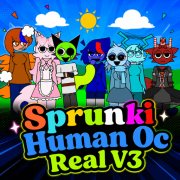
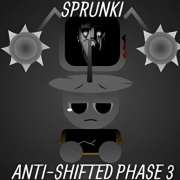
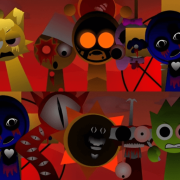
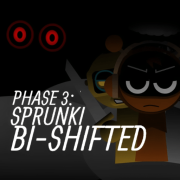
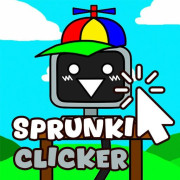
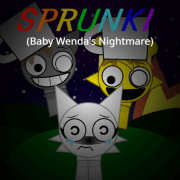
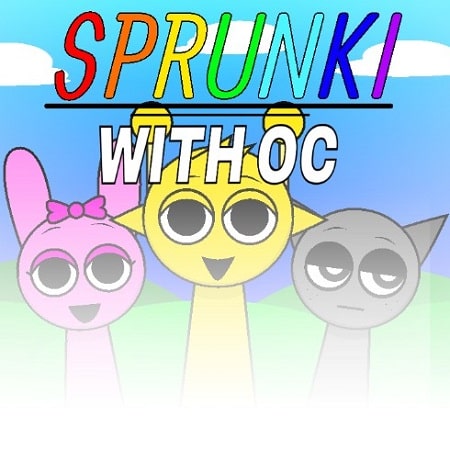
This build is a fan-character experiment. Open it and notice what is fixed — the tray, the sound groups — and what the fan author chose: the design, the name, the role. That split is what the whole article is about.
Rotate your phone for landscape play
S P R U N K I · W I K I
Warming up the beat…
Loading game...
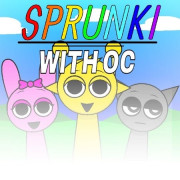
Sprunki OC
Nothing in the game tells you the character's backstory. Whatever you have read about it elsewhere was written by someone, and that someone was not the build.
The short version
- Playable builds catalogued
- 279
- Character profiles written from builds
- 20 original, plus guest entries
- Story pages
- 14
- Pages that invent a canonical answer
- 0
- Fan-character builds in the catalog
- 4 labelled OC builds
- Claim types on a character page
- Observed, inferred, fan interpretation
Fan canon is the material, not the contamination
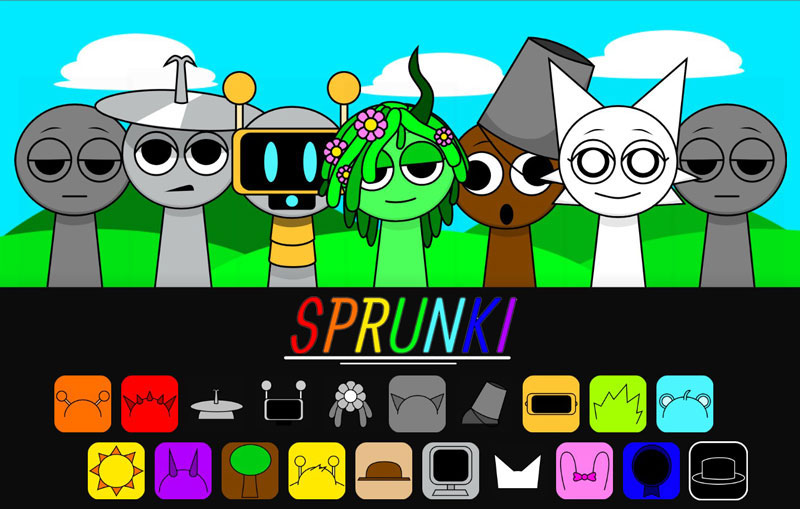
Sprunki has no official canon to be faithful to. The original build is a drag-and-drop music toy with twenty performers and no dialogue, no cutscenes and no text beyond the interface. Everything people call the lore was written afterwards, by players, in fan wikis and comment sections and videos. That is not a defect — it is how a game with no narrative generated a decade of narrative anyway.
The problem starts when a fan page cites itself. One wiki asserts that a character has a specified personality; a second wiki copies the sentence; a video repeats it; and six months later the claim is quoted as established fact on a page that has never opened the build. The claim did not become true by being repeated. It became unfalsifiable, which is worse for a reference.
This site takes a blunt position: fan interpretation is welcome, but a page must mark it. A character page can say what the build shows, what can be reasonably inferred from it, and what is a reading rather than an observation. All three are legitimate. Presenting them all in one voice is not.
- Observed: the performer exists, sits in this sound group, has this horror form.
- Inferred: the horror form changes the animation timing and the loop density.
- Interpretation: what the change is supposed to mean — flagged as a reading, never as fact.
Three tests for any Sprunki claim you read
The first test is whether the claim could be false. A sentence like 'Wenda is a vocal performer' could be checked against the build and survives. A sentence like 'Wenda represents the creator's own isolation' could never be checked, which means the page is not telling you about the build, it is telling you about the author. Both are fine to read; only one belongs in an encyclopedia entry.
The second test is whether the claim names its evidence. A page that says a build contains a hidden character should tell you how to reach it. A page that says a phase includes content should tell you where in the interface that content lives. If the instructions do not work, the claim was copied, not observed.
The third test is consistency across pages. If a character's sound group is listed one way on a character page and another way on a mod page, at least one of them was written without opening the build. On a site that generates its pages from one catalog, that kind of drift is impossible by construction — which is a structural advantage a hand-edited wiki cannot match no matter how careful its editors are.
Why fan characters are the honest edge case
Fan characters — OCs, in the community's term — are where the canon question becomes unavoidable. A build like this one is a fan character experiment: it takes the fixed grammar of the format and drops a designed character into it. The design, the name and the sound role were choices made by a person, and there is no authority above that person to confirm or deny anything about them.
That is why OC builds are a useful benchmark for a wiki. A page about an original character has a build to appeal to. A page about a fan character has only the build the author shipped. If a site can document an OC build accurately — what it contains, how the character behaves in the tray, what the loop does — it can be trusted on the original cast too, because the harder case is being handled correctly.
It also sets a limit that a good wiki states rather than hides. There is no answer to most questions about an OC's backstory, because the backstory was never shipped. The honest entry says the build contains a character with this name, this role and this look, and stops.
The five things fan wikis get wrong most often
Ninety percent of the errors on Sprunki pages fall into five buckets, and each of them is fixable by opening the game.
Merged builds: two builds with the same title get one page, so the page describes a hybrid that does not exist. Invented unlocks: pages describe how to 'unlock' a character or phase when the build just includes it. Borrowed cast lists: a roster copied from a different family. Phase arithmetic: pages assume a Phase 6 exists because a Phase 5 does. And invented authorship: a build attributed to a named creator with no evidence, which is the one error that can get a fan site into real trouble.
- One page per build, not per name.
- Describe what the build includes, never how to 'unlock' it.
- Take the cast list from the build, not from a sibling page.
- Do not infer a missing number from a present one.
- Do not attribute authorship you cannot evidence.
Reading fan canon without being misled
The practical skill is sorting claims by type as you read, and it gets fast with practice. Concrete claims about mechanics, cast and controls are checkable, so check them once and then trust the source that survived. Claims about intent, symbolism and relationships are not checkable, so treat them as one person's reading — including when they are repeated everywhere, because repetition is not verification.
There is also a version of this that helps rather than defends. Fan readings are how a game with no story accumulates one, and some of them are genuinely good: a reading of the horror state as a change in the performer rather than the room is supported by the fact that removing a specific character ends it. Those readings belong on the site, labelled as readings, and linked to the build so a reader can decide for themselves.
Questions this post answers
What does fanon mean in Sprunki?
Fan canon — the body of character backstory, relationships and interpretation that players wrote rather than the game shipping. The original build contains no narrative text at all.
Is fanon wrong?
No. It is the only narrative the format has. The problem is a page that presents interpretation as observation, which makes the two impossible to tell apart afterwards.
Does this wiki include fan readings?
Yes, marked as readings and linked to the build they are about, so a reader can check the observation underneath the interpretation.
How do I know a character page here was written from the game?
It states the sound group, the horror form and the tray behaviour, and every one of those is checkable in under two minutes on the embedded build.