Mod families · 8 min read
Sprunki 1996 Wiki
One build in the catalog carries the year 1996, and it carries a second name too: Lomando. This is what that combination actually is, why the retro-horror framing reads the way it does, and what the build will not tell you no matter how long you look.
The one build that carries the year
Open it and look at the resolution before you look at anything else. The art is deliberately low-fidelity, and that decision is the whole identity of this build.
Rotate your phone for landscape play
S P R U N K I · W I K I
Warming up the beat…
Loading game...
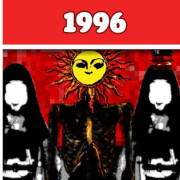
Sprunki Lomando 1996
The year in the title is an aesthetic label, not a release date. Nothing in the build claims to be from 1996.
The short version
- Builds in the catalog with 1996 in the title
- 1
- Build name
- Sprunki Lomando 1996
- Family
- Retro-horror crossover
- Control scheme
- Standard drag-and-drop mixer
- Art direction
- Deliberately low-fidelity
- What the title dates
- The aesthetic, not the code
What the year in the title is doing there
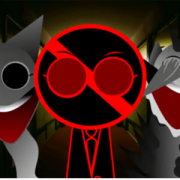
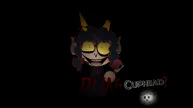
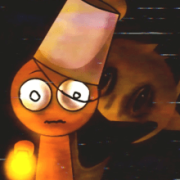
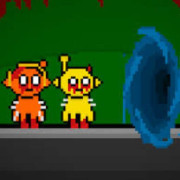
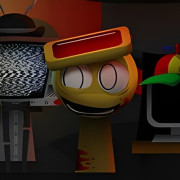
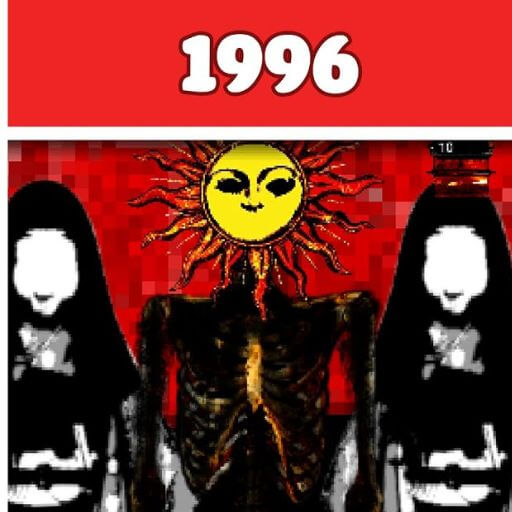
A year in a fan build's title is a style claim. It tells you what the build is trying to feel like, in the same way that a build called Shifted tells you it is re-textured. The 1996 in this build's name points at mid-nineties console horror: low resolution, limited palette, a deliberate compression of detail that reads as old hardware even on a modern screen.
It is not a release date. The build is a contemporary fan project. Nothing in it asserts an origin in 1996, and the page does not claim one. The distinction sounds pedantic until you read a wiki that has blurred it, which then has to explain why a game from 1996 references a character created decades later.
The second word in the title, Lomando, is a crossover reference. A Sprunki build carrying another game's name is doing two things at once: it is a Sprunki mixer, and it is a tribute to the other property's visual language. Both halves are visible in the build, which is what makes the combination legible rather than arbitrary.
- The year describes an aesthetic, not a release.
- The second name in the title is a crossover reference.
- Both references are visible in the build itself.
- The page describes what is on screen, not a backstory.
Why retro-horror styling changes how the game reads
Low fidelity is not neutral. When you reduce resolution and palette, you remove the visual information that tells a player something is safe. Smooth gradients and clean edges read as friendly; dithered textures and hard edges read as old, and old reads as slightly wrong. That is the entire engine of the nineties horror aesthetic, and it works here for the same reason it worked then.
It also changes play. A character icon rendered at low fidelity is harder to identify at a glance, so the recognition loop that makes the original build feel effortless slows down. You spend the first minute hunting for a performer instead of mixing. Some players find that atmospheric; others find it friction. Both reactions are correct, and knowing which you are is the fastest way to decide whether this family is for you.
What the build will not tell you
It will not tell you a story. There is no dialogue, no text beyond the interface, and no cutscene. Whatever narrative you have read attached to this build was written by a player. That is normal for the entire format, but it is worth stating plainly here because the retro-horror aesthetic invites much more narrative projection than a plain build does — an old-looking room feels like it has a history, and pages rush to supply one.
It will not tell you who made it either, beyond whatever attribution exists at the source. Fan builds circulate with attribution stripped constantly, and a page that guesses is worse than a page that says it does not know. Where the source is known, this site links it. Where it is not, it says so.
- No narrative text ships with the build.
- No confirmed authorship beyond the listed source.
- The aesthetic invites projection; that is not evidence.
- Attribution is linked where known and left blank where not.
How to compare it with the plain build
Open the original in one tab and this build in another. Three differences are immediately visible. The art is lower fidelity here, with a restricted palette and harder edges. The tray is restyled, so the icons read as period objects rather than modern character portraits. And the horror state, if reached, is far more effective, because the baseline is already unsettling — the same shift that feels jarring against a pastel room feels like a natural continuation here.
That comparison is also the useful answer to 'is this better?' Neither is better. The plain build is the reference implementation and the retro build is a mood piece. If you want to mix, the plain build gets out of your way faster. If you want to be unsettled while you mix, this one does it better than any amount of darkness applied to a clean build.
Where the retro treatment sits in the wider catalog
The catalog treats retro styling as its own direction rather than as an effect layered on a family. That matters because it means the retro builds do not cluster under Retake or Horror by default; they can carry either family label and still be retro. What unifies them is the decision about fidelity, not the decision about mood.
When you have played a few, the pattern is clear. Retro treatment changes the entry cost — how long it takes to identify a character — and changes the ceiling of the horror state, because a low-fidelity baseline amplifies a visual shift. It does not change the loop, the groups, or the controls. Understanding that makes every retro build in the catalog predictable in the useful sense: you know what you are getting and you know what will not change.
Questions this post answers
Is Sprunki 1996 an old game from 1996?
No. The year is an aesthetic label describing a retro, low-fidelity horror style. The build itself is a contemporary fan project.
What is Lomando in the title?
A crossover reference to another horror property. A build carrying that name is a Sprunki mixer styled after that property's visual language.
Is there a story in the game?
No. The build contains no narrative text, dialogue or cutscenes. Story attached to it elsewhere was written by players, not shipped with the game.
Is the retro version harder to play?
Slightly, at first. Low-fidelity icons are harder to recognise, which slows the first minute of mixing. The controls and mechanics are identical.