Reference · 10 min read
Sprunki Wiki Characters
Twenty performers, four sound groups, five in each. This is the complete named cast of the original format, what each one contributes to a loop, and how to read the horror forms that every one of them has.
Meet the cast by placing them
A roster read as a list is forgettable. Place each performer once and listen to what disappears when you remove them — that is the fastest way to learn the cast, and it takes about four minutes.
Rotate your phone for landscape play
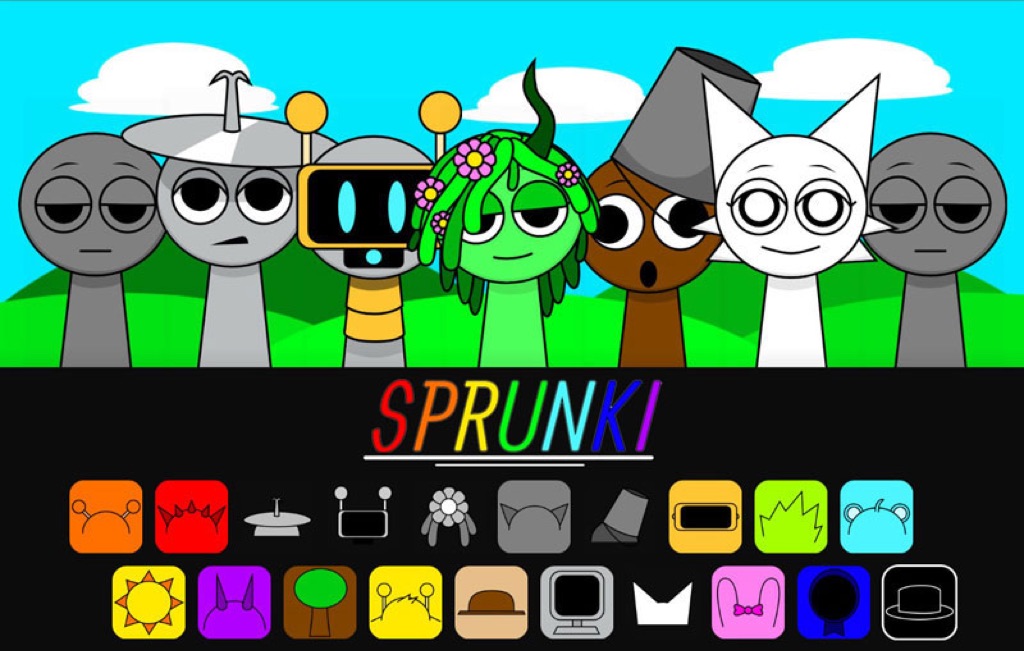
S P R U N K I · W I K I
Warming up the beat…
Loading game...
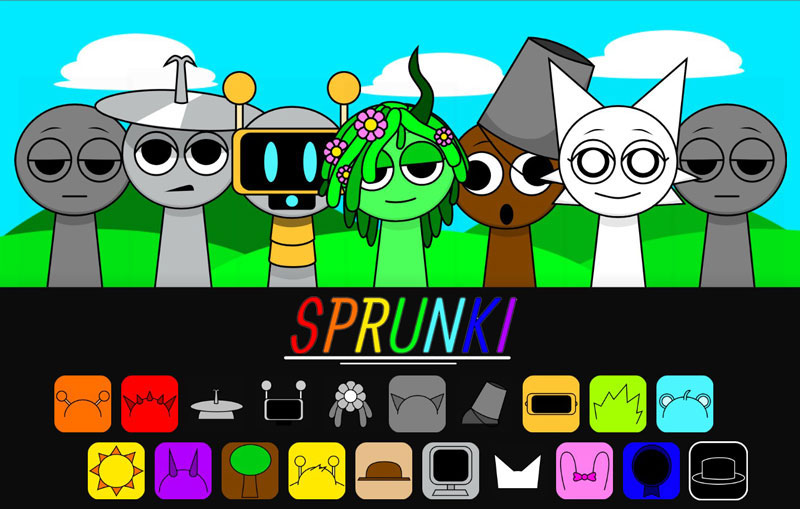
Sprunki Game
Start with one character from each group. Then remove each one in turn and listen for the hole.
The short version
- Characters in the original cast
- 20
- Sound groups
- 4: beats, effects, melodies, vocals
- Characters per group
- 5
- Characters with a horror form
- 20
- Hidden vocals
- 1 (Black)
- Character profile pages on this site
- 20 original plus guest entries
The four groups, and why the grouping is the whole trick
Every character belongs to exactly one of four groups, and the group determines what the character contributes no matter which build you are playing. Beats carry rhythm and percussion. Effects carry texture — the sounds that make a loop feel produced rather than performed. Melodies carry pitch. Vocals carry voice. A loop with only one group sounds broken; a loop with one from each sounds finished.
This is the most useful piece of knowledge on the entire site, because it transfers. A fan build can rename every character, redraw every icon and reorder the tray, but it does not change what the four groups do. Learn the groups and you can pick up a build you have never seen and make something listenable in under a minute.
- Beats: percussion, defines tempo and drive.
- Effects: noise and texture, defines mood.
- Melodies: pitched lines, defines the tune.
- Vocals: voice, defines the character of the loop.
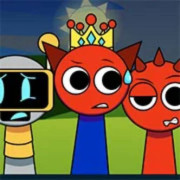
Beats: Oren, Raddy, Clukr, Fun Bot, Vineria
Oren plays the kick drum, which means Oren is the floor of the mix — remove it and everything above sounds like it is floating. Raddy plays snare and hi-hat, the backbeat that gives a loop its sense of forward motion. Clukr plays cymbal and drum, the layer that fills the top end without competing with the melody. Fun Bot carries the amen break, the recognisable breakbeat that instantly dates a loop as energetic rather than smooth. Vineria plays maracas and cabasa, the shaker texture that quietly keeps a sparse loop from sounding empty.
If you are learning, start with Oren and Raddy together. That pairing is the skeleton of nearly every Sprunki loop and it is the reference point for judging every other layer you add.
Effects: Gray, Brud, Garnold, OWAKCX, Sky
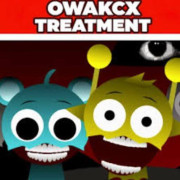
The effects group is where the mood lives, and it is the group new players under-use. Gray provides the bass and the darker texture that dominates Retake-style remixes. Brud adds noise and grit. Garnold adds a treated, almost mechanical layer. OWAKCX supplies the strange, unstable sound that makes a loop feel unsettling. Sky plays a music box, which is the single most recognisable effect in the cast and the easiest way to make a loop sound deliberately wrong.
A practical exercise: build the same three-character loop twice, once with Sky and once with Gray. Nothing else changes and the loop reads completely differently — one is a nursery rhyme, the other is a horror score. That is the effects group doing its job.
Melodies: Mr. Sun, Durple, Mr. Tree, Simon, Tunner
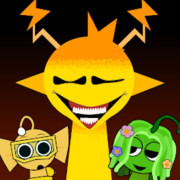
Mr. Sun plays piano, the cleanest pitched line in the cast and the easiest melody to build around. Durple plays trumpet, which cuts through a dense mix and is the reason Durple-heavy loops sound brassy rather than soft. Mr. Tree plays organ, the sustained layer that fills space between notes. Simon plays an 8-bit synth, the most stylistically distinct melody in the cast and the one that instantly makes a loop read as a fan remix rather than the original. Tunner plays a whistle, a thin high line that works as a hook.
Melodies compete with each other more than any other group. Two melody characters at once can sound intentional or can sound cluttered depending on which two, and the only way to learn the difference is to try the pairings. Simon and Mr. Tree, for example, occupy completely different registers and coexist cleanly. Durple and Tunner both live in the upper range and fight for the same space.
Vocals: Mr. Fun Computer, Wenda, Pinki, Jevin, Black
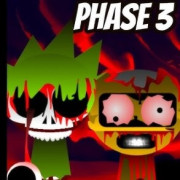
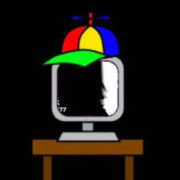
Mr. Fun Computer contributes a processed, machine-like vocal that suits builds leaning mechanical. Wenda contributes the most recognisable voice in the cast and, partly for that reason, the most redesigned one — Retake builds rework Wenda more than any other performer. Pinki adds the bright upper vocal. Jevin contributes the choir, the layer that turns a loop from a beat into something that sounds sung. Black contributes the hidden dark vocal, the performer behind the horror state.
The vocals group is also where the cast's most common misconception lives. Players assume the horror state is a mode; it is a performer. Everything that follows from that — that removing Black returns the stage to normal, that a build without Black may not have the state at all — becomes obvious once the framing is right.
- Four standard vocals, one hidden dark vocal.
- The dark vocal is a performer, not a setting.
- Wenda is redesigned more than any other character across families.
- Jevin's choir is the layer that makes a loop sound sung.
How to use the character pages
Every one of the twenty has its own page, and the page is built around the comparison people actually want: normal form against horror form, with the family variants collected underneath. That structure comes from the data — each character profile lists the builds it appears in, so the page can show sixteen variants without hand-maintaining a list that rots.
Read a character page when your question is about one performer. Read a family page when your question is about a direction. Read a phase hub when your question is about a number. Those three routes cover almost every Sprunki question, and keeping them separate is why each one can be short and specific instead of trying to answer everything at once.
Questions this post answers
How many Sprunki characters are there?
The original cast has 20 performers, five in each of four sound groups. Fan builds add many more, which is why a character you saw in a mod may not appear here under the same name.
Which character is the hidden one?
Black, the fifth vocal. Placing Black is what produces the darker horror state in the original build, and removing Black ends it.
Do all characters have horror forms?
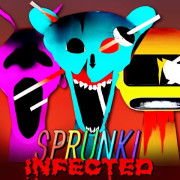
In the original cast, yes — every performer has a horror form. In fan builds the set is usually complete but individual removals happen.
Why do the same names appear in mods with different art?
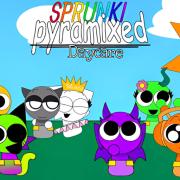
Fan builds reuse the original cast and redesign it. The name and the sound group persist; the design and often the exact audio are the fan author's choices.