Mod families · 8 min read
Sprunki Horror Wiki
Nine builds in the catalog are tagged horror and six carry the word in their titles, and those are not the same six. Here is what horror means as a tag, how the state is triggered, and which build to open first.
The clearest horror build
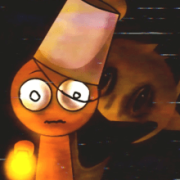
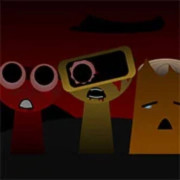
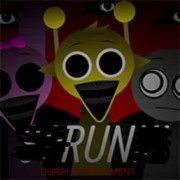
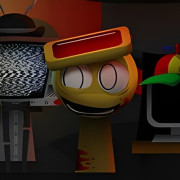
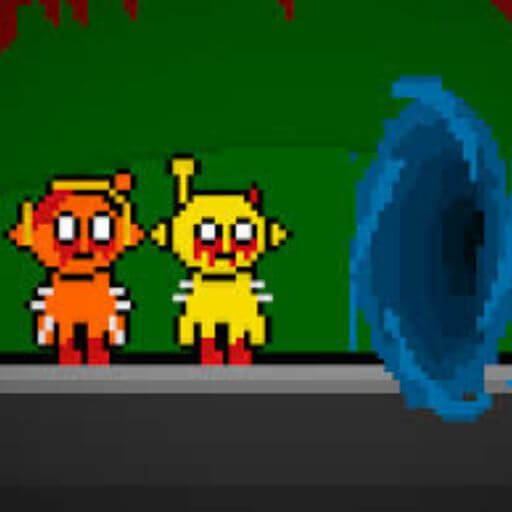
This one is the reference point: the cast is the familiar one, the dark treatment is applied evenly, and nothing else is competing for your attention. Build a normal loop first, then place the hidden vocal and hear what changes.
Rotate your phone for landscape play
S P R U N K I · W I K I
Warming up the beat…
Loading game...
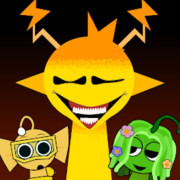
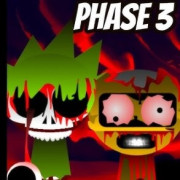
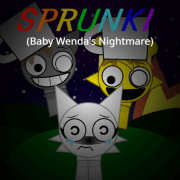
Sprunki Horror Version Dark
Place a full loop before you reach for the dark state. The switch only tells you something when there is something recognisable for it to switch away from.
The short version
- Builds tagged horror in the catalog
- 9
- Builds with horror in the title
- 6
- Builds in both sets
- Not the same six
- How the state is triggered
- Placing the hidden dark vocal
- How the state ends
- Removing that performer
- Dedicated family page
- /mods/horror/
- Spiders, jumpscares, loud stingers
- None required
Horror is a tag before it is a title
Two different things get called horror here, and the difference explains most of the confusion around the query. The catalog tags builds with collections: nine carry the horror tag today. Separately, six builds carry the word horror in their title or their slug. The overlap is partial, and neither set is the definitive list of frightening builds.
Why the mismatch? The tag is assigned when a build is catalogued, and it marks the register the build plays in. The title is whatever the uploader called the file. A build called Analog Horror Tapes is both. A build called Sprunki Music with the tag attached is only the tag. A build called Sky Eating Snack At 3 AM is neither, and is still unsettling.
That matters because a reader searching for horror expects one list and every page offers a different one. The honest answer is that horror is a spectrum in this catalog, not a folder, and the nine tagged builds are the closest thing to a starting set.
- Nine builds carry the horror tag.
- Six builds carry the word in their title.
- The two sets only partially overlap.
- Neither set is the definitive list of scary builds.
The state is a performer, not a menu
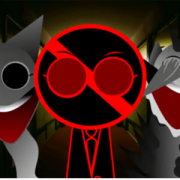
The mechanic is the same across the format and it is worth stating precisely because descriptions elsewhere imply a settings toggle that does not exist. The horror state is reached by placing one specific performer — the hidden dark vocal, Black — on the stage. Remove that performer and the state ends. Nothing is saved, nothing is unlocked, and no menu is involved.
Builds differ in how they use that mechanism. Some start in the dark state and stay there, treating it as the baseline rather than a switch. Some require you to build a loop before placing the vocal, so the transition is the event. Some replace character faces with horror variants while keeping the audio unchanged. And some carry no state at all despite wearing the horror label, because the mood lives in the palette.
The practical consequence is that horror is best verified in the game rather than in a description. Open the build, place a loop, place the hidden vocal, remove it. Ten seconds, and you know which of the four behaviours you are dealing with.
The nine tagged builds, grouped by what they actually do
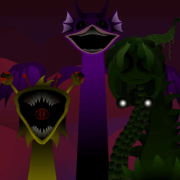
Four of the nine are straight palette-and-mood jobs: the familiar interaction, the familiar cast, and a visual treatment that reads as wrong. Sprunki Horror Version Dark is the clearest of these and the one to open first, because it changes the mood without changing anything you have to relearn.
Two lean into an aesthetic rather than a mechanic: Analog Horror Tapes frames the game as found footage, and Sprunkhead - The Abyss borrows a mascot-horror register. In both cases the unsettling part is the framing, and the mixing underneath is ordinary.
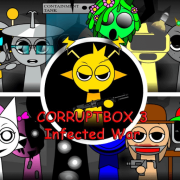
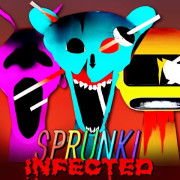
Three are hybrids: builds that belong to another family first and pick up the horror tag on the way, such as the corrupted-box treatment and the infected builds. These are the ones most often mis-sold, because the horror is a side effect of a different design decision, and a reader who wanted mood may find themselves in a completely different mechanic.
Horror, Retake and Treatment are not synonyms
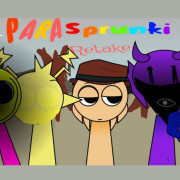
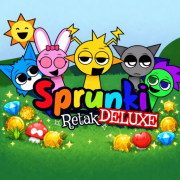
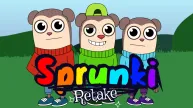
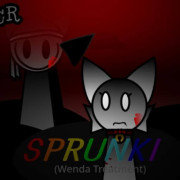
Three dark-leaning labels get used interchangeably and the differences are structural. Horror centres on the state: the interesting question is what the dark looks like and how you reach it. Retake is a remake — the dark state is one element of a redesign that also touches palette, icons and audio. Treatment follows a single character's transformation, so the roster is arranged around one protagonist rather than recoloured evenly.
The quickest discriminator is scope. If the whole cast is redesigned, it is Retake. If one character is the subject, it is Treatment. If the cast is familiar and the change is mostly the state, it is Horror. None of the three is darker or better than the others; they are arranged around different questions.
- Horror: the state is the subject.
- Retake: the whole cast is redesigned.
- Treatment: one character is the subject.
- Scope tells them apart faster than palette does.
Why the darkest build is a bad entry point
There is a predictable arc in this family: a new player opens the most extreme build first, finds the icons unreadable, misses the horror state entirely because they cannot find Black, and concludes the format is not for them. The failure is sequencing, not taste.
The order that works is the opposite one. Start with a build that is normal at load and switches on demand, so the ordinary game is established before the frightening one. Learn where the hidden vocal sits in the tray. Then move to a build that starts dark, where the baseline is already altered and the comparison is no longer available.
That order also makes the catalog legible. Once you know what normal feels like and what the switch does, every dark build becomes a comparison rather than an undifferentiated mood, and the nine-tag list turns from a list of scary things into a list of specific design decisions.
What to do if a horror build will not play
Two failures account for almost every complaint. The first is audio: browsers require a click before a page can make sound, so a build that looks loaded but is silent usually needs one tap on the stage. The second is a deferred build — a very large one waits for a tap before it loads at all, which reads as a broken page until you press the start control.
Both are interface behaviour rather than faults, and both are covered on the site's how-to-play guidance. If a build still does nothing after a tap and a second of loading, it is a real problem with that upload rather than with your browser, and the game page's own notes are the place to check before drawing conclusions about the whole family.
Questions this post answers
How many Sprunki horror builds are there?
Nine builds carry the horror tag in this catalog, and six carry the word in their title. The two sets only partially overlap, which is why no single list is definitive.
How do you get horror mode in Sprunki?
Place the hidden dark vocal performer on the stage. Remove it and the state ends. There is no settings toggle, and nothing is unlocked or saved.
Which Sprunki horror build should I play first?
Sprunki Horror Version Dark. It keeps the familiar cast and starts from a normal baseline, so the switch is something you can compare against.
Is Sprunki horror the same as Sprunki Retake?
No. Horror centres on the dark state itself; Retake is a full redesign that includes one. Treatment is a third thing again, built around a single character's transformation.