Start here · 9 min read
Sprunki Wiki
There are hundreds of Sprunki builds and almost no agreement about which one a name points to. This wiki exists to fix that one page at a time — one build per URL, one version claim per page, and a playable game on the page that makes the claim.
The build the wiki is written around
Everything below describes the original drag-and-drop format. Play it here before the notes, because the notes assume you have seen the tray.
Rotate your phone for landscape play
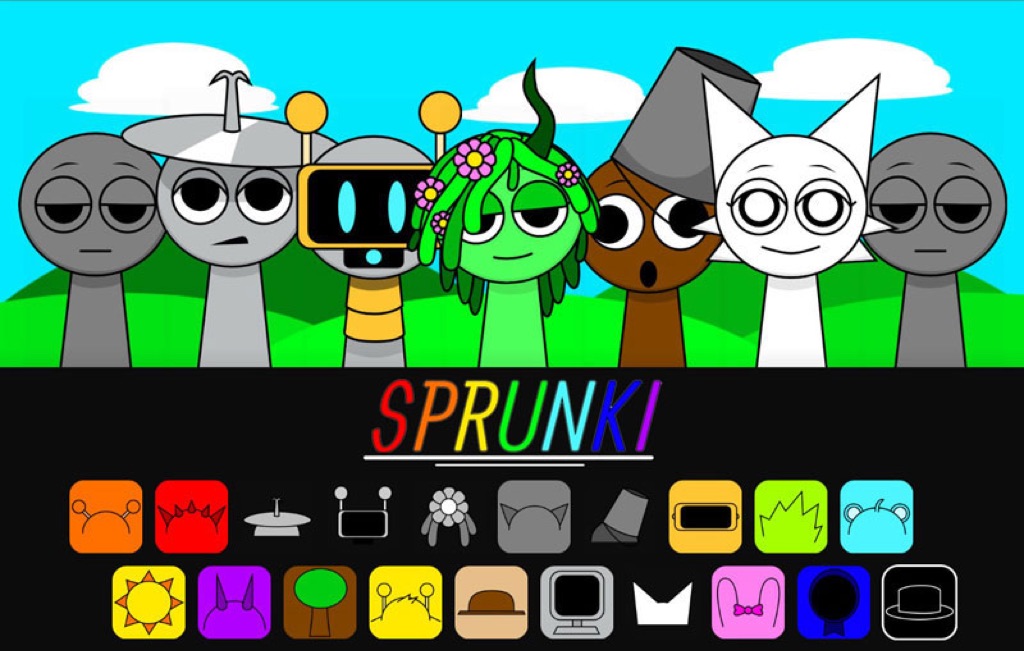
S P R U N K I · W I K I
Warming up the beat…
Loading game...
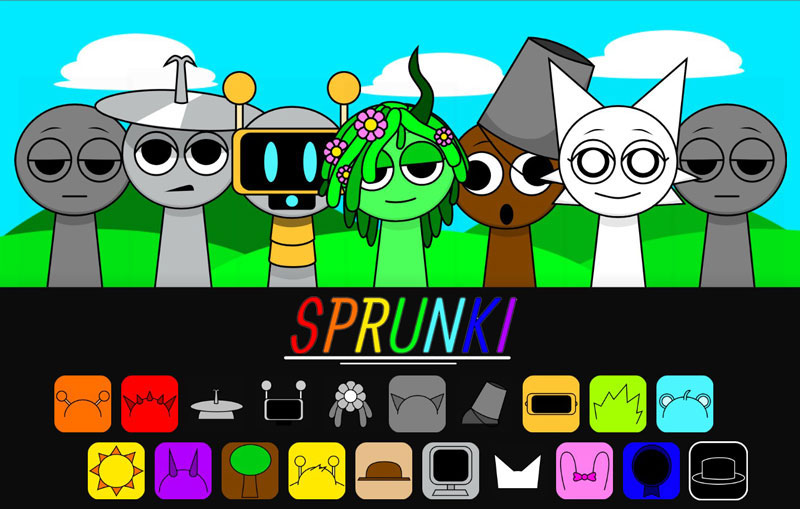
Sprunki Game
This is the plain classic build: five performers per sound group, a normal state and a Horror Mode state. No update labels, no re-textures.
The short version
- Playable builds catalogued
- 279
- Original characters documented
- 20, in four groups of five
- Mod families with their own page
- 18
- Numbered phase hubs
- 2
- Character profiles
- 20 original plus guest entries
- Story pages
- 14
- Sitemap URLs published
- 365+
- Paid unlocks, loot boxes or cash prizes
- None
What a wiki is supposed to do that a search result does not
A search for a Sprunki build returns a video, a listicle and three pages with the same title. None of them tell you whether the build you are about to open is the one in the video. That gap is the whole reason this site exists: every build gets an address of its own, a stated cast, a stated control scheme, and the game itself embedded at the top so the claim can be checked in the same tab.
That sounds obvious until you try it at scale. Fan uploads are replaced quietly. A page titled with a version word keeps that title after the owner re-uploads a different build. Builds with identical names carry different casts. A wiki that copies titles inherits every one of those problems; a wiki that opens the builds does not.
So the editorial rule here is narrow and it is applied to all 279 entries: the page says what the build contains, the build is playable on that page, and if the two disagree the page is wrong and gets fixed. Nothing is described from a screenshot of somebody else's page.
- One URL per distinct build, with the build playable on it.
- Version words in a title are treated as claims to verify, not facts to repeat.
- Every character, phase and mod page links back to the builds it describes.
- No page claims a feature, an unlock or a price that the build does not show.
The cast, by sound group
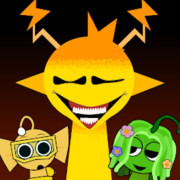
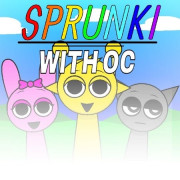
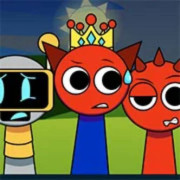
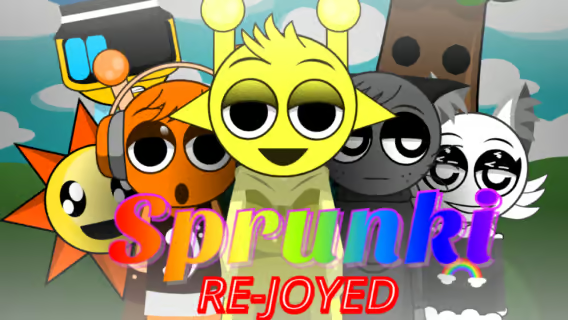
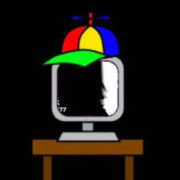
The original format is twenty performers in four groups of five, and the group a character belongs to is the single most useful thing to know about them. Beats are Oren on kick drum, Raddy on snare and hi-hat, Clukr on cymbal and drum, Fun Bot on the amen break, and Vineria on maracas and cabasa. Effects are Gray, Brud, Garnold, OWAKCX and Sky, whose part is a music box. Melodies are Mr. Sun on piano, Durple on trumpet, Mr. Tree on organ, Simon on an 8-bit synth and Tunner on whistle. Vocals are Mr. Fun Computer, Wenda, Pinki, Jevin on choir, and Black, the hidden dark vocal.
Once you know the groups, two things stop being confusing. The first is why a mix sounds empty: four performers, one from each group, is the minimum for a loop that sounds finished. The second is why every fan build feels both familiar and wrong — the names persist, the group roles persist, and the art and audio are what change.
Families, phases and the difference between them
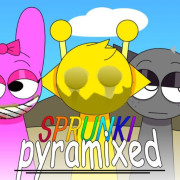
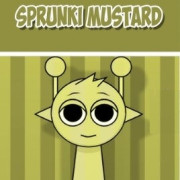
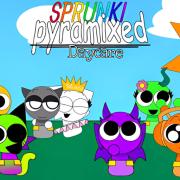
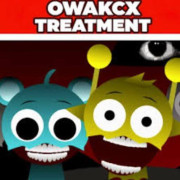
Two organising ideas run through the catalog and they are not the same thing. A family is a label several builds share — Retake, Pyramixed, Mustard, Treatment, Shifted, FNF, Corruptbox, Clicker, Brainrot and a dozen others. A phase is a number in a title. Families describe a direction; phases describe a build that claims a position in a sequence that does not really exist.
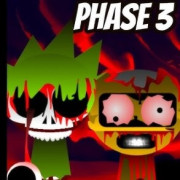
This site keeps 18 family pages and 2 phase hubs, and the split is deliberate. Family pages answer a question a reader can actually act on — what makes Retake different from Pyramixed, and which one should I open. Phase hubs answer a weaker question, because the numbering is fan convention rather than canon: there is no Phase 6 in the catalog while Phase 777 exists, which tells you everything about how the numbers were assigned.
- A family page groups builds that share a label and explains what that label changes.
- A phase hub lists the numbers the catalog actually hosts, read from the titles themselves.
- A build can belong to two families; it is listed under both rather than forced into one.
- Neither page invents a sequence the builds do not support.
How the game pages differ from every other Sprunki list
Three decisions separate a game page here from the pages that rank above it. First, the answer comes before the player: the title, the summary, the key facts and the jump links sit above the embedded build, because a visitor who searched a specific name wants to know whether they are in the right place before they commit to loading anything. Second, the related games are chosen to be genuinely nearby — same family, same phase neighbourhood, overlapping cast — rather than the four most popular games on the site. Third, the page never repeats a game card twice, so a reader scrolling to the bottom is seeing new options rather than the same suggestions again.
That last point is a technical rule with a visible consequence. An earlier version of this site linked the same build up to six times on one page, which reads to a person as padding and to a crawler as duplicate anchors pointing at one target. The catalog now allocates each page's game slots once, so a page that shows you 63 games shows you 63 different games.
What this wiki deliberately does not have
There is no account requirement, no credit system, no cosmetic shop and no randomised reward on any of the 279 pages. The wiki is a reference with a player attached, not a game with a shop attached, and the absence of those mechanics is a decision rather than a gap. The only accounts on the site exist for the community side — saving a favourite, commenting on a build, uploading a remix — and none of it gates a game.
The other deliberate absence is invented canon. Plenty of Sprunki pages will tell you the backstory of a character who appears in three fan builds and nowhere else, in confident prose with no source. This wiki does not do that: character pages describe what the builds show, and when a detail is fan interpretation the page says so instead of dressing it up as lore.
Where to go next
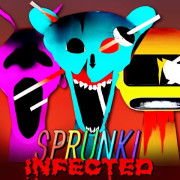
If you arrived with a name and no context, the fastest route is the family page for that name: Retake, Pyramixed, Mustard, Treatment, Shifted and the rest each explain their own direction in one screen. If you arrived with a number, go to the phase hubs, which list what exists rather than what the sequence implies. If you arrived with a character, the character pages carry the normal and horror forms side by side, because that comparison is the most common thing people get wrong.
And if you arrived with nothing in particular, the honest advice is to start with the build embedded above. Twenty performers, four groups, one hidden dark vocal. Everything else on this site is a variation on that, and knowing the base makes every one of the 279 entries legible.
Questions this post answers
Is this the official Sprunki wiki?
No. It is an independent fan reference. Sprunki itself is a fan-made format rather than an official product, and this site is not affiliated with any of the creators whose builds it hosts.
How many Sprunki builds does the wiki cover?
279 playable builds, each on its own page, plus 18 family pages, 20 character profiles, 14 story pages and the phase hubs that list the numbered builds.
Do I need an account to play?
No. Every build is playable without signing in. An account only adds community features such as saving favourites or posting a comment.
Why is there one page per build instead of one page per name?
Because builds sharing a name routinely have different casts, sounds and controls. Merging them into one page would hide the difference that made you search in the first place.