Mod families · 9 min read
Sprunki Retake Wiki
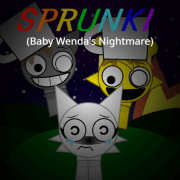
Retake is the family that put horror into the format, and it has more re-releases than any other. Five builds carry the label on this site, the titles do not distinguish them, and four checks inside the game do.
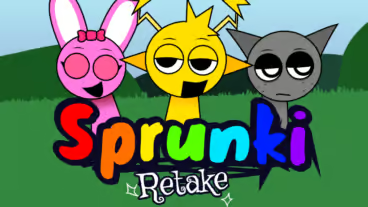
The base Retake build
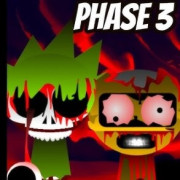
This is the version most clips show. Open it, place a full loop, then place the hidden vocal and listen to what the horror state does to the same loop.
Rotate your phone for landscape play
S P R U N K I · W I K I
Warming up the beat…
Loading game...
Sprunki Retake
If this build starts dark rather than switching when you place a performer, you have opened one of the later remakes rather than the base.
The short version
- Builds carrying the Retake label
- 5
- Base build
- sprunki-retake
- Other versions here
- Retake 2.0, Retake Deluxe, ParaSprunki Retake, Retake Max Design Pro
- Characters redesigned most often
- Wenda, Gray, Black
- Control scheme
- Unchanged from the original
- Horror state trigger
- Placing the hidden vocal
- Family page
- /mods/retake/
What Retake changed, and why it stuck
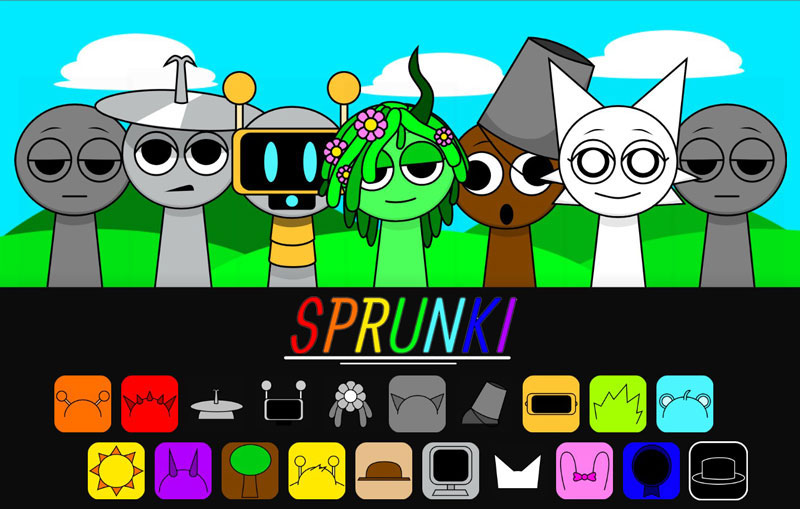
Retake is the family that decided the cheerful format worked better when it was frightening. The proposition is simple: keep the tray, keep the four sound groups, keep the characters — and redesign the whole thing around a horror register. The result landed because it did not ask players to relearn anything. Muscle memory transferred, and the payoff was entirely atmospheric.
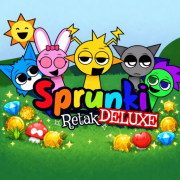
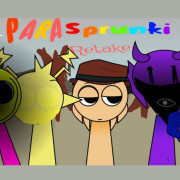
That is also why it spawned so many re-releases. A direction that is easy to extend invites extension, and five builds in the catalog carry the Retake label in their titles: the base build, a 2.0, a Deluxe, a ParaSprunki crossover, and a Max Design Pro version. Each is a separate upload with its own roster and its own horror behaviour.
The family page exists because that list is the question. Nobody searching for 'sprunki retake wiki' wants one build; they want to know which of the five the thing they saw is.
- Same controls, same groups, darker register.
- Five builds carry the label here.
- Each has its own roster and its own horror behaviour.
- The family page lists all five with distinct summaries.
The three characters Retake rewrites
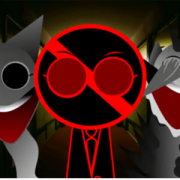
Wenda gets the most attention. The most recognisable voice in the original cast becomes the most redesigned figure in Retake, and the redesign is usually the first thing a viewer notices in a clip. Gray carries the bass and the darker texture, so the family's mood is largely built on Gray's layer being foregrounded rather than buried. Black, the hidden dark vocal, is the mechanism: the horror state is reached by placing Black, and it ends when Black is removed.
Knowing those three is enough to orient yourself in any Retake build. Wenda tells you how committed the redesign is, Gray tells you how dark the mix will sound, and Black tells you whether the horror state is a switch you control or something the build has already decided for you.
Four checks that identify the build you opened
First, the opening state. Does the build begin in the dark state, or does it begin normal and switch when you place a character? A build that starts dark is a later remake that assumed you already knew Retake; the base build starts normal.
Second, the tray order. Remakes frequently reorder the icons, so if the performer you expect in the third slot is somewhere else, you are in a redesign rather than the base. Third, the start screen: look for a version word. Deluxe, 2.0 and the Max Design Pro label each appear somewhere in their builds, and if the word on the page does not appear on screen, the page and the build disagree.
Fourth, and most usefully, continuity. Some Retake builds end when the horror state is reached and some continue past it. Builds that carry on are the aftermath-style versions, and that single difference changes the experience more than any visual redesign.
- Opening state: dark at load or normal at load?
- Tray order: matches the original or reordered?
- Version word: does the page's word appear on screen?
- Continuity: does the build continue past the horror state?
Comparing Retake with the families it is confused with
Retake is most often confused with Horror and with Treatment, and the confusions are different. Horror builds are about the state itself — they load dark, and the interesting part is what the dark looks like. Retake builds are about the remake — the state is one element of a broader redesign that includes palette, icons and audio. A Retake build can have a mild horror state and still be unmistakably Retake.
Treatment is confused with Retake because both are dark and both centre on a character. The difference is scope: Treatment builds follow one character's transformation, so the roster is arranged around that character, while Retake redesigns the whole cast evenly. If a build seems to have one protagonist, it is not Retake.
Playing Retake well
Build the loop before you reach for the horror state. The state is more effective as a transformation of something familiar than as the first thing you hear, and every Retake build rewards the same order: one beat, one effect, one melody, one vocal, then a second pass adding layers, and only then Black.
That order also makes the comparison possible. If you reach the state before you have a loop you care about, the switch tells you nothing. If you build a loop you like and then switch, you hear exactly which layers were replaced and where the redesign lives — which is the difference between this family and a build that simply looks dark.
Questions this post answers
How many Sprunki Retake versions are there?
Five builds in this catalog carry the Retake label: the base build, Retake 2.0, Retake Deluxe, ParaSprunki Retake and Retake Max Design Pro. Each is a separate upload.
Is Retake the same as Horror?
No. Horror builds centre on the dark state; Retake builds are full redesigns that include it. A Retake build can have a mild state and still be clearly Retake.
How do I reach Horror Mode in Retake?
Place the hidden dark vocal, Black. Remove Black and the stage returns to normal. There is no settings toggle.
Which Retake should I play first?
The base build. It starts normal, which makes the switch meaningful, and it is the version most footage shows.