Reference · 9 min read
Sprunki Phases Wiki
There is no Phase 6 in the catalog and there is a Phase 777. That single fact explains the numbers better than any lore page: phases are labels creators added, not chapters anyone numbered in order.
The baseline phase
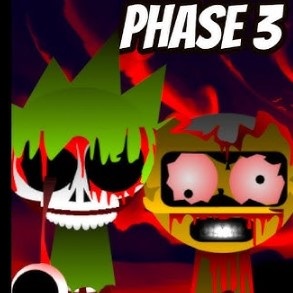
Phase 3 is the number most players recognise and the best reference point in the whole family. Open it, build a loop, then compare every other phase number against what you just heard.
Rotate your phone for landscape play
S P R U N K I · W I K I
Warming up the beat…
Loading game...
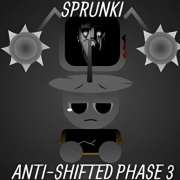
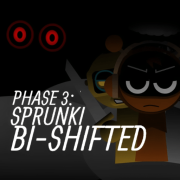
Sprunki Phase 3
Nothing about Phase 3 is harder or easier than Phase 777. The number is a label on a build, not a difficulty setting.
The short version
- Phase-numbered builds in the catalog
- 33
- Distinct phase numbers present
- 16
- Numbers present
- 1, 2, 3, 4, 5, 7, 8, 9, 10, 11, 12, 15, 18, 56, 222, 777
- Numbers absent
- 6, and most values above 18
- Builds carrying Phase 3
- 10
- Builds carrying Phase 4
- 5
- Dedicated phase hub pages
- 2
Why the numbering is not a sequence
The intuitive reading of a phase number is chapter order: Phase 1 came first, Phase 4 came later, a higher number means further along. The catalog contradicts that reading immediately. Thirty-three builds carry a phase number, and the numbers present run 1, 2, 3, 4, 5, 7, 8, 9, 10, 11, 12, 15, 18, 56, 222 and 777. There is no Phase 6 at all, while Phase 222 and Phase 777 exist.
The explanation is mundane. Phase numbers were chosen by fan creators as part of a build's identity, often to signal darkness or scale, without reference to a shared list. Two creators could both ship a Phase 4 and produce different games. Nobody was keeping a register, so no number was ever reserved and no number was ever owed.
This matters practically because it changes which page you open. Someone looking for Phase 6 will not find it and may conclude the site is incomplete. Someone looking for Phase 50 will find nothing and assume the same. The honest answer is that those builds are not in the catalog, and the phase hubs list what is rather than what the sequence implies.
- Phase numbers are fan-assigned labels, not chapters.
- A missing number means no build here carries it.
- A high number is not a later story point.
- The same number can mean two different games from two creators.
The three phases that actually matter
Phase 3 carries ten of the thirty-three builds in the catalog, which makes it both the most common label and the de facto baseline. If someone says 'the phase games' and shows you a clip, it is probably a Phase 3. Phase 4 is the second most common with five builds and is the usual next step. Phase 1 and Phase 2 are early and comparatively rare here, with three builds between them.
Then there is the long tail. Phase 7, 8, 9, 10, 11, 12, 15 and 18 each appear once or twice, and Phase 56, 222 and 777 appear once each. Those extreme numbers are worth opening precisely because they are unusual: they tend to be the most heavily restyled builds in the catalog, and they demonstrate how far the format stretches while still being a drag-and-drop mixer.
What changes between phases, and what never does
The mechanics never change. Every phase build in the catalog is a drag-and-drop mixer with a sound tray and four sound groups. A phase number does not introduce new controls, does not gate the tray behind progression and does not add a difficulty curve. Anyone telling you a higher phase is harder is describing atmosphere, not interaction.
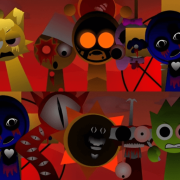
What changes is atmosphere and cast. Phase builds push the visual state darker, redesign character icons, reorder the tray and sometimes change which performers are present. The horror state in particular varies more than anywhere else in the catalog: some phase builds start in it, some require the hidden vocal to reach it, and some carry it as an alternate set of character faces rather than a separate mode.
- Controls: unchanged across phases.
- Sound groups: unchanged, though individual parts differ.
- Cast: often present in full, sometimes trimmed.
- Atmosphere: the main variable, sometimes dramatically so.
- Tray order: frequently changed, which breaks muscle memory.
How to tell two phases apart in thirty seconds
Open both builds in two tabs and run four checks. First, the start screen: does either announce its number, or does the number exist only in the page title? Builds that announce it are usually the more deliberate versions. Second, the tray: compare the icon order. Third, the horror state: is it present at load, reached by placing a performer, or absent? Fourth, the sound: place the same four performers in both and listen for which layer has been replaced.
Four checks, thirty seconds, and you will know more about the difference between two phase builds than any description can convey. It also protects you from the most common disappointment in this family, which is opening a page titled Phase 4 and finding a build that is functionally the same game you already played under a different number.
Why this site keeps only two phase hubs
There are sixteen distinct phase numbers in the catalog and only two dedicated hubs. That is deliberate. A hub exists when there is a genuine cluster worth navigating — a number with enough builds, or a variant (a swapped, re-textured Phase 4) that needs its own explanation. Creating a hub for every number present would produce sixteen pages that each say 'here is one build'.
The rest of the phase builds are reachable through the phase family page, through the game pages themselves, and through the related-game rail on every phase page, which is built from the catalog rather than hand-curated. That means a build added today appears in the right place tomorrow without anyone editing a list.
The mistake almost everyone makes with phases
The mistake is treating the number as information about quality. It is not. A Phase 2 build is not an early draft and a Phase 777 build is not a remaster. They are two fan uploads that chose two labels, and either could be the more polished game.
The second mistake is assuming a phase page covers the phase. A page called Phase 4 describes one build that carries the label, not a definitive version of everything called Phase 4. There are five such builds in the catalog. The page that covers the label is the phase family page, and the pages that cover the builds are the build pages. Keeping that distinction straight is the entire skill of using a phase wiki.
Questions this post answers
How many Sprunki phases are there?
Sixteen distinct numbers appear across 33 playable builds on this site, running from Phase 1 to Phase 777. There is no complete official list because the numbers are fan-assigned.
Is there a Phase 6?
Not in this catalog. No build we host carries that number, so the hub does not list one. A missing number means no build, not a missing chapter.
Which phase is the hardest?
None. Phases change atmosphere and cast, never controls. Every phase build is the same drag-and-drop mixer with four sound groups.
Why is Phase 3 so common?
Ten of the 33 phase-numbered builds carry it, which makes it the most common label and the usual reference point when people talk about phase games.